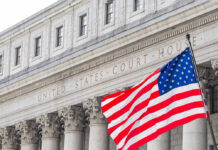

House Republicans advanced the SAVE America Act to require proof of citizenship and photo ID for federal elections, igniting a fierce Senate showdown over election integrity.
Story Highlights
- House passed the SAVE America Act 218-213 to tighten voter registration and ID rules.
- Bill requires documentary proof of U.S. citizenship to register for federal elections.
- Measure adds a nationwide photo ID requirement that supporters say most Americans back.
- Senate prospects face a Democratic filibuster despite reports of 50 Republican votes.
What The House Passed And Why It Matters
House lawmakers passed the SAVE America Act on a 218-213 vote. The bill would require people to show documentary proof of United States citizenship to register for federal elections and would mandate eligible photo identification to vote. Supporters say the bill closes gaps and raises trust in results. The measure follows years of debate over voter verification standards and aims to set a clear, uniform baseline for federal contests across all states.
The bill text lists acceptable citizenship documents, including a United States passport and other official records, and directs states not to accept voter registration without proof. Backers argue that the rule aligns the law with common sense and long-standing citizenship requirements. They also highlight a new national photo ID standard at the polls, which Republicans say will deter fraud and improve confidence in close races.
What Supporters Are Saying About Voter ID And Public Backing
Republican leaders point to polling that shows strong support for photo ID to vote. They cite figures that 83 percent of Americans favor photo ID, including majorities of Democrats, Hispanic Americans, and Black Americans. They argue a uniform rule protects every lawful ballot and makes outcomes harder to dispute. They frame the bill as a direct response to voter concerns and a step toward simple, secure elections coast to coast.
Supporters also stress that many states already require some form of identification. They say a federal baseline will end the patchwork that confuses voters and invites loopholes. They add that clear rules reduce legal fights after Election Day. For conservatives, the plan defends the principle that only citizens vote and that one person gets one ballot, with the same standard applied in every state for federal races.
Where The Bill Stands In The Senate And What Comes Next
The bill’s future now rests with the Senate. Reports indicate Republicans have lined up about 50 votes, but leaders say they are not close to the 60 needed to defeat a Democratic filibuster. Democrats remain strongly opposed and have signaled they will block floor movement. As of late June, Senate leadership had no set plan to bring the bill back for another vote after it stalled this spring.
Rep. Boebert’s criticism of John Thune reflects rising tensions over the stalled SAVE America Act, fueling "uniparty" accusations from conservatives frustrated by the Senate's procedural gridlock.
— sandym (@Sandy1Texas) July 13, 2026
Advocacy groups on the left call the bill burdensome and say there is little evidence of widespread noncitizen voting. They warn that in-person document checks could make registration harder for some voters. Backers counter that the bill codifies clear proof rules already used in daily life, like showing ID to fly or buy certain items. The legislative fight will likely center on whether a national standard boosts trust more than it burdens signup and turnout.
How The SAVE America Act Would Change Election Procedures
If enacted, the law would amend the National Voter Registration Act to require documentary proof of citizenship for federal registration. States could not accept or process an application without such proof. The bill also requires voters to present an eligible photo ID at the polls for federal elections, creating a single nationwide rule. County offices and election workers would adjust procedures to verify documents at registration and to check IDs at voting sites.
Election officials would need to update forms, train staff, and communicate the new standards to voters. Supporters say the clear checklist will reduce errors and prevent ineligible registration attempts. Opponents warn about added workload and possible delays. Implementation details, including acceptable documents and accommodations, are spelled out in the bill text and related summaries. The scope of change would vary by state, depending on current rules and systems already in place.
Bottom Line For Voters And Constitutional Principles
For many conservatives, the SAVE America Act is about protecting the ballot, the bedrock of self-government. They see proof of citizenship and photo ID as basic safeguards that match the gravity of choosing leaders. The House vote shows momentum for stronger standards. The Senate fight will decide whether those standards reach the finish line before the next election cycle, or whether Americans wait longer for uniform, common-sense checks at registration and at the polls.
Sources:
redstate.com, politico.com, roy.house.gov, majorityleader.gov, naco.org, northjersey.com, en.wikipedia.org, michwomen.com, congress.gov