
A near-fatal shot at President Trump in Butler, Pennsylvania has now been officially branded a “preventable” security scandal that exposed deep failures inside the United States Secret Service.
Story Snapshot
- Congressional investigations say Secret Service mistakes directly enabled the Butler assassination attempt on Donald Trump.
- Senate and House reports describe the attack as “preventable” and caused by leadership, training, and communication breakdowns.
- Secret Service reviews admit an “operational failure,” with agents missing clear warning signs and leaving key buildings unsecured.
- Conservatives are demanding real accountability and reforms so this never happens again to Trump or any future president.
How Trump’s Butler Rally Turned Into A Near-Fatal Security Collapse
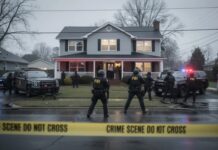
On July 13, 2024, then-former President Donald Trump stood before supporters at the Butler Farm Show grounds in Pennsylvania when a gunman opened fire from a nearby rooftop, grazing Trump’s ear and killing firefighter Corey Comperatore in the crowd. The shooter had climbed the roof of the American Glass Research building overlooking the rally, giving him a clear line of sight on the stage. A bipartisan Senate report later found that security lapses and poor communication inside the United States Secret Service directly contributed to the gunman’s ability to reach that position and nearly take Trump’s life.
Senator Rand Paul’s Homeland Security and Governmental Affairs Committee released a 94-page final report that lays out how Secret Service leadership repeatedly denied requests for more agents, equipment, and resources to protect Trump during the campaign. The report describes a disturbing pattern of mismanagement and missed warning signs, including ill-defined roles for advance agents, poor coordination with local police, and a failure to share threat intelligence with the detail guarding Trump at Butler. According to the committee, these breakdowns created a situation where an assassination attempt was not only possible but foreseeable and avoidable.
Investigators Agree: The Attack Was “Preventable” And Rooted In System Failures
A bipartisan House task force reached the same stark conclusion, calling the Butler shooting “tragic and preventable” and blaming preexisting leadership and training problems inside the Secret Service. Lawmakers found that inexperienced personnel were given major planning duties, that coordination with local law enforcement was weak, and that basic protective steps—like fully securing nearby buildings—were not taken. A year after the attack, six Secret Service personnel were suspended without pay or benefits, but no one was fired, prompting frustration that discipline did not match the seriousness of the failures.
The Secret Service itself has now publicly labeled Butler an “operational failure” and admitted multiple breakdowns in communication, technology, and human performance. An internal mission assurance review found gaps in command and control, lapses in radio contact, and a lack of diligence by agents responsible for Trump’s safety. An independent review panel for the Department of Homeland Security went even further, describing “deep flaws” in the agency’s culture, a lack of critical thinking, and hesitance among personnel to voice concerns about obvious risks. That panel urged fundamental reforms, including changes in top leadership, to prevent another near-tragedy.
Missed Warnings, Unsecured Roofs, And A Detail Left In The Dark
Reports from Congress and the Department of Homeland Security spell out the most alarming missed chances to stop the shooter long before he fired. Investigators found that nobody was assigned to secure the American Glass Research building, even though it posed a direct line-of-sight threat to the rally. Local officers first spotted the suspicious individual on or near the property more than an hour before the shooting, yet no one from the Secret Service or local law enforcement directly confronted him or removed him from the area.
Even worse, Trump’s personal detail was never told about the suspicious man on the roof in the critical minutes before he took the stage, leaving the president exposed without knowing a potential sniper was in position. Different radio channels used by federal agents and local officers made quick information sharing almost impossible. The independent panel also noted that anti-drone technology malfunctioned the morning of the rally and one officer failed to retrieve a radio that would have connected him to local authorities. Put together, these failures show a protective system that broke down on the day when Trump needed it most.
What This Means For Trump Supporters, Future Presidents, And Accountability
For many conservatives, the Butler reports confirm a deeper fear: that the federal security apparatus has grown slow, bureaucratic, and careless, even when the life of a president is on the line. The fact that credible requests for more protection were denied, threat intelligence was not shared, and obvious rooftop risks were ignored raises hard questions about priorities inside the Secret Service. Trump supporters now see Butler as a turning point that shows how dangerous government complacency can be when paired with growing political hatred and unrest.
A new inspector general report released two years after the attempted assassination of Donald Trump in Butler, Pennsylvania, says the Secret Service missed more than 100 radio transmissions warning about the suspected gunman.
The attack killed firefighter Corey Comperatore as he… pic.twitter.com/WVyqQgn44k
— Breaking911 (@Breaking911) July 13, 2026
Congress has responded with new legislation aimed at improving resources and oversight for presidential protection, but many gaps remain, especially in culture and accountability. Investigations show that the Butler failures did not come from a single bad decision but from a long chain of overlooked warnings, weak leadership, and poor training. For readers who care about the Constitution, the peaceful transfer of power, and basic law and order, Butler is a warning: if the federal government cannot guarantee the safety of a sitting president, it falls on citizens and their representatives to demand serious reforms until those deep flaws are fixed.
Sources:
mediaite.com, politico.com, youtube.com, bbc.com, hsgac.senate.gov, taskforce-kelly.house.gov, abcnews.com, facebook.com, secretservice.gov, congress.gov, en.wikipedia.org, legis1.com