
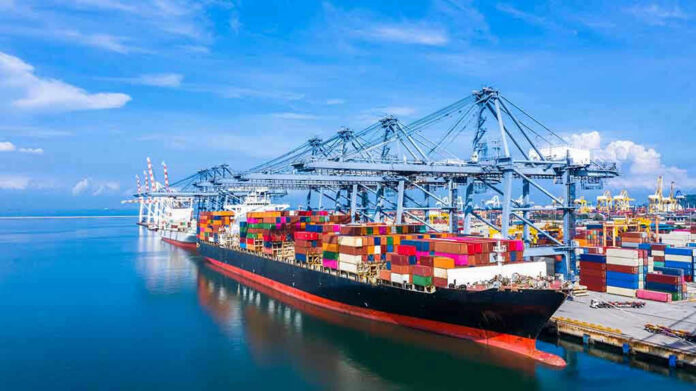
Italian police just pulled nearly $290 million worth of “extremely pure” cocaine out of a banana shipment that was supposed to slip quietly into Europe’s supply chain.
Story Snapshot
- Italian authorities seized about 1,700 pounds of high-purity cocaine hidden in a refrigerated banana container from Ecuador at the port of Vado Ligure.
- Officials say the haul, packed into 650 bricks, could have brought in roughly $286–$290 million on the street, making it one of that port’s biggest drug busts in years.
- The bust fits a growing pattern: cocaine moved to Europe in fruit containers from Latin America, as traffickers exploit global trade routes and strained border controls.
- The case highlights why many on both left and right fear that elites profit from a system that lets record amounts of drugs and crime flow while ordinary people pay the price.
Massive cocaine haul hidden in bananas at Italian port
Italian financial police and customs officers stopped a refrigerated shipping container loaded with bananas from Ecuador at the northwest port of Vado Ligure and found a massive hidden cargo of cocaine. Inside, they discovered roughly 770 kilograms, or about 1,700 pounds, of the drug, packed into 650 separate bricks and tucked among dozens of banana pallets. A field test showed the powder was extremely pure, which means traffickers likely planned to dilute it and multiply the street value many times over.
Police said the seized cocaine had an estimated market value of about 250 million euros, close to 286 to 290 million dollars, if it had been sold on European streets. Italian authorities described the operation as one of the largest anti-drug actions carried out at Vado Ligure in recent years, and said it followed deep analysis of shipping routes linking South America to the port. The container arrived from one of Ecuador’s main export ports, a trade hub that drug gangs have quietly turned into a launch pad for Europe-bound shipments.
A familiar smuggling method in a booming European cocaine market
This bust did not come out of nowhere; it fits a clear pattern where cocaine is hidden in fruit, especially bananas, moving from Latin America to Europe’s ports. Europol’s European Drug Report says European Union states reported 323 metric tons of seized cocaine in 2022, the sixth record year in a row, showing how big the overall flow is. Spain’s biggest-ever cocaine seizure in 2023 also involved 9.5 tons hidden in a banana shipment from Ecuador, underscoring how common this method has become.
Italy itself has seen repeated banana-linked seizures, from 2.7 tons found in containers from Ecuador at the port of Gioia Tauro to other large hauls in Vado Ligure, making clear that traffickers treat these ports as regular gateways, not one-off targets. In these cases, smugglers exploit refrigerated containers, or “reefers,” that carry perishable goods and move quickly through crowded terminals with limited checks. Risk analysts note that these containers remain central to global cocaine trafficking, connecting South America, Europe, and other markets through normal-looking trade flows that overwhelmed inspection systems struggle to police.
Why this matters to people who feel the system is failing
For many Americans watching from afar, this story is not just about Italy, bananas, or one lucky bust; it taps into a deeper fear that global trade and border systems work for criminals and connected elites more than for regular families. When almost three hundred million dollars in hard drugs can ride into Europe inside legal food shipments, it confirms the sense that our modern economy can be gamed by those with money, contacts, and lawyers. People see governments missing shipment after shipment while lecturing citizens about safety and law and order.
Conservatives who back tough borders and national sovereignty point to cases like this as proof that international networks take advantage of open trade lanes while Western taxpayers swallow the social costs of addiction, crime, and broken communities. Liberals alarmed by growing inequality see another angle: organized crime and corrupt insiders making fortunes off a system that ships both cheap products and deadly drugs through the same ports, while underfunded schools and treatment centers struggle to cope. Both sides can agree that when ports become drug superhighways, ordinary workers and families end up footing the bill.
Global supply chains, weak oversight, and the “deep state” worry
The Vado Ligure seizure also exposes how hard it is to control complex global supply chains once they are built, especially when inspection budgets and staffing lag far behind trade growth. Customs agents must scan thousands of containers a day, often with old equipment and political pressure to keep goods moving, not hold them up. That reality feeds the belief that leaders in government and big business are more focused on keeping trade flowing and profits rising than on stopping the poison that flows in with it, especially when seizures like this one are the rare cases we hear about.
🔴 Italian police seize $286M cocaine hidden in Ecuador banana shipment
Italian authorities at the port of Vado Ligure in northwest Italy seized 1,700 pounds of pure cocaine concealed in a refrigerated container of bananas on Tuesday. The drug carried an estimated street value… pic.twitter.com/2r0M5z6Zog
— NewsTongue (@NewsTongueX) July 21, 2026
Many citizens on both the right and the left now worry that a “deep state” of powerful insiders can tolerate, or even quietly benefit from, a system where record amounts of cocaine move through official channels while public statements promise crackdowns. They look at numbers like 323 tons seized in one year across Europe and realize that seizures are only a slice of what gets through. The banana bust in Italy becomes more than a headline; it feels like a snapshot of a world where the rules are bent for the well-connected and enforced hardest on those with the least power.
Sources:
facebook.com, cbsnews.com, nampa.org, discoveritalianriviera.com, quinewspisa.it, abc.net.au
![🇺🇸|🇱🇧 President Donald Trump Meets President of Lebanon Joseph Aoun at The White House [LIVE]](https://beyondnews.org/wp-content/uploads/sites/2/2026/07/maxresdefault-15-218x150.jpg "Oval Office Shock: Lebanon’s Leader Steps In")