
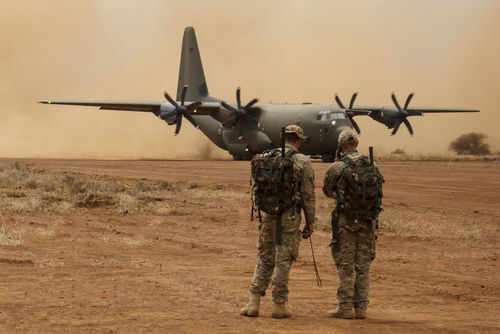
Iran’s Revolutionary Guards say they struck U.S. military aircraft in Jordan with ballistic missiles and drones, claiming they destroyed several fighter jets and refueling aircraft at the Al-Azraq base.
Quick Take
- The Islamic Revolutionary Guard Corps (IRGC) said it hit U.S. aircraft and support sites in Jordan.
- The group claimed it destroyed several refueling planes and fighter jets.
- Jordan said it intercepted Iranian missiles and reported no immediate damage.
- The claim fits a wider pattern of Iranian strike announcements that often lack independent confirmation.
What Iran Claimed
The IRGC said its forces used ballistic missiles and drones against the U.S.-linked Al-Azraq Air Base in Jordan. Iranian state media also said the attack hit a command center and aircraft shelters. Another report said the force fired 10 ballistic missiles at the base and a U.S. command center. The same reports claimed the strike destroyed the targeted facilities and caused serious damage to more assets.
Those claims were not matched by any immediate confirmation from Jordan or the United States. Jordan said earlier that it intercepted eight missiles launched from Iran, and officials said there were no casualties or damage. That matters because the public record already shows a gap between Iran’s battlefield rhetoric and what outside observers can verify. Readers should treat the destruction claims as assertions from Tehran unless later evidence proves them.
Why This Matters for the Region
The strike report came amid a fast-moving exchange of attacks across the Middle East. Iranian outlets said the operation was retaliation for American strikes, and they warned that more attacks could follow. Jordan sits in a fragile spot between regional powers and U.S. forces. When Iran fires missiles toward a base hosting American aircraft, the risk reaches beyond military hardware and into wider regional stability.
For conservatives who have watched years of costly foreign policy drift, the bigger issue is not just one strike claim. It is the larger pattern of Iran using force, threats, and propaganda together. The same playbook has appeared in earlier rounds of fighting, where Iranian statements announced major wins that later proved hard to verify. That makes clear, sober reporting essential, especially when Tehran is trying to project strength.
What Is Known So Far
Published reports agree on a few basic facts. Iran’s Revolutionary Guards said they launched missiles and drones toward the Al-Azraq area in Jordan. Jordanian forces said they intercepted missiles aimed at the kingdom. What remains unconfirmed is the scale of any damage inside the base itself. At this point, the strongest verified detail is the launch and interception of the attack, not the sweeping destruction Iran claimed.
The Islamic Revolution Guard Corps (IRGC) announced that it targeted US fighter jets and aerial refueling aircraft in #Jordan in response to the US aggression against "civilian targets, including several bridges, residential areas, and a water pumping station in Bandar Abbas,… pic.twitter.com/DOI8cN8UPT
— Al Mayadeen English (@MayadeenEnglish) July 17, 2026
The episode also shows how quickly the information war moves during a regional crisis. Iranian officials used dramatic language, named specific U.S. aircraft, and framed the strike as retaliation. Jordan’s response stayed focused on interception and public safety. That contrast is important. One side is selling a victory story. The other is reporting what its defenses caught. Until independent evidence shows real damage, the claim remains just that—a claim.