
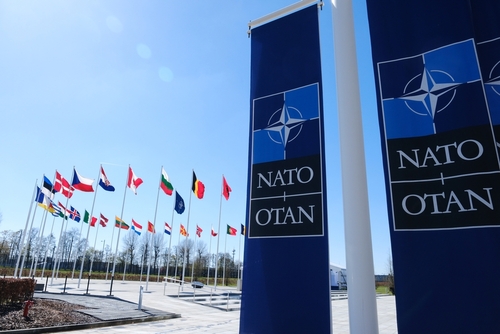
The most powerful general in Europe just said thousands of departing American troops will not weaken NATO, and that raises a sharper question than anyone in Brussels wants to ask out loud: what, exactly, are U.S. soldiers in Europe for now?
Story Snapshot
- A top NATO commander says the withdrawal of 5,000 U.S. troops from Germany will not harm European defense plans
- Washington frames the move as a routine realignment, while critics see punishment and political theater
- Europe has quietly grown more capable, but still leans heavily on U.S. logistics, intelligence, and high-end weapons
- The deeper battle is over who carries the long-term cost of defending the continent: American taxpayers or European governments
Why A “Harmless” Withdrawal Sounds Bigger Than It Is
The United States is pulling about 5,000 troops out of Germany, roughly one in seven of the American forces stationed there, and the Pentagon insists this is a measured response to “theater requirements and conditions on the ground,” not a downgrading of its pledge to defend Europe. The message from the top NATO commander mirrors that line: the alliance’s war plans, he says, remain intact and Europe’s growing military muscle fills the gap. On paper, he is probably right; politically, the story is trickier.
Germany’s defense minister publicly downplayed the shock value, calling the move anticipated and stressing that Europe must “become stronger within NATO.”[1] That calm tone tells you Berlin had read the writing on the wall for years. Successive U.S. presidents warned Europeans to spend more, carry more weight, and stop treating American security guarantees as an unlimited subsidy. The German response amounts to: we do not love this, but we can live with it, and frankly we no longer have a choice.
What Those 5,000 U.S. Troops Actually Do
Critics focus on the raw number, but the real question is which units go and where they go next. Earlier Trump-era drawdown plans targeted specialized formations like the 2nd Cavalry Regiment and aviation brigades, not basic infantry.[3] Those kinds of units provide mobility, reconnaissance, and rapid reinforcement along NATO’s eastern flank. Losing some of them in Germany does not erase U.S. power; it lengthens response times and complicates the logistics spreadsheets that planners rely on when crises erupt.
American forces in Germany anchor much more than local defense. They host command headquarters, training ranges, air bases, and medical and logistical hubs that support operations from the Baltic to the Middle East.[3] That is why every adjustment triggers anxiety in Warsaw, Tallinn, and beyond. When the United States repositions troops, it changes how quickly help can arrive for allies on Russia’s doorstep. The top commander’s reassurance rests on a quiet assumption: Europe will keep upgrading its own forces fast enough to cover any delay.
Routine Realignment Or Political Message?
The formal announcement from Washington speaks the language of bureaucratic calm: a “thorough review,” a timeline of “six to twelve months,” and reassurances that roughly 30,000 U.S. troops will remain in Germany to fulfill alliance commitments.[2] Defense officials emphasize flexibility, rotation, and the idea that modern deterrence depends more on readiness and precision weapons than on sheer headcount. That is true as far as it goes, and conservatives in the United States have long argued that permanent garrisons can become outdated sacred cows.
European and American media, however, quickly tied this withdrawal to a rougher political story: years of friction over defense spending, trade, and the Iran war.[3][4] Reports describe the decision as landing after a public dispute between President Trump and Germany’s chancellor, with some analysts calling it punitive.[4] If allies suspect they are being slapped rather than strategically recalibrated, trust erodes. Deterrence is not just about tanks and aircraft; it is about whether Moscow believes NATO countries will actually stand together when the bill comes due.
Is NATO Actually Weaker, Or Finally Growing Up?
NATO officials admit they scrambled at first to understand the decision, pressing Washington for clarity on how the move fits into broader plans. That scramble itself shows how dependent Europe became on the United States for signals and comfort. Yet the same officials also stress that European defense budgets are up, front-line states are hardening their forces, and the alliance has adapted since Russia’s first moves against Ukraine. In other words, the security blanket is being slowly cut down to size, and Europe is sewing its own patches.
The US will pull 5,000 troops from Europe with more likely to follow in the long term, a top NATO military commander said Tuesday, confirming an earlier announcement by President Donald Trump https://t.co/7y6NzRp01g
— Unapologetic Fun (@stevewells11) May 19, 2026
From a common-sense, conservative perspective, American voters have a right to ask why tens of thousands of U.S. troops still sit in Germany eight decades after World War Two while Europe runs large welfare states and only recently began to hit spending targets. A modest drawdown that pressures wealthy allies to do more is not betrayal; it is overdue burden-sharing. The commander’s confidence, if rooted in genuine European improvements, points to an alliance finally rebalancing instead of clinging to nostalgia.
The Real Test Will Not Be This Drawdown
The deeper concern is not this batch of 5,000 troops, but what comes next. Analysts note that Washington has already talked about a future “European-led NATO” by 2027, which sounds uncomfortably like a soft countdown to much larger American cuts later on.[2] If each new reduction arrives wrapped in soothing language, governments can pretend nothing essential changes. Yet signals accumulate. At some point, European leaders will either step decisively into the role of primary defenders of their own continent, or discover too late that the U.S. safety net has quietly thinned beyond repair.
Sources:
[1] YouTube – US troops pull out of Germany: What it means for NATO | DW News
[2] Web – Hegseth orders 5,000 US troops to withdraw from Germany
[3] YouTube – U.S. troop withdrawal from Germany deepens transatlantic tensions
[4] Web – Trump’s call to reduce US troops in Germany shocks Pentagon