

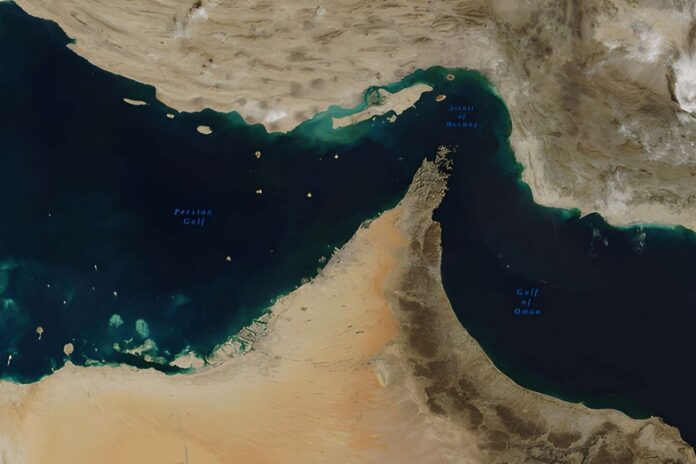
U.S. Central Command struck Iranian radar installations at Goruk and Qeshm Island after intercepting four Iranian attack drones aimed at the Strait of Hormuz — and Tehran is now threatening to escalate further while declaring nuclear negotiations are “at a deadlock.”
Story Highlights
- U.S. Central Command conducted self-defense strikes on Iranian military radar and ground control stations at Goruk and Qeshm Island near the Strait of Hormuz.
- American forces shot down four Iranian one-way attack drones before they reached their targets, then hit the sites that launched and guided them.
- Iran responded by firing missiles at U.S. allies Kuwait and Bahrain, striking Kuwait’s airport and killing at least one person.
- Tehran declared nuclear negotiations are “at a deadlock” and warned the U.S. understands “the language of missile better than the language of diplomacy.”
U.S. Forces Intercept Drones, Then Strike the Source
U.S. Central Command (CENTCOM) announced it shot down four Iranian one-way attack drones launched toward the Strait of Hormuz before they could reach their targets. [3] Following the intercepts, American forces struck the Iranian military ground control station on Qeshm Island and radar installations at Goruk that supported those drone operations. [1] CENTCOM stated the strikes were acts of self-defense in response to “attempted attacks by Iran across the Middle East,” and confirmed no U.S. personnel were injured. [2]
The Strait of Hormuz is one of the world’s most critical chokepoints — roughly 20 percent of global oil supply passes through it. Allowing Iran to operate attack drones and radar installations targeting that corridor unchallenged would hand Tehran enormous leverage over global energy markets and threaten American naval assets in the region. Taking out the ground control stations that guided those drones was a direct, proportional response to a clear and documented threat.
Iran Fires Back at U.S. Allies — Kuwait and Bahrain Hit
Following the American strikes, Iran’s Islamic Revolutionary Guard Corps (IRGC) launched missile and drone attacks targeting Kuwait and Bahrain, both of which host U.S. military installations. [6] Reports confirmed explosions at Kuwait’s airport, with at least one person killed and dozens injured. [9] The IRGC claimed responsibility for the strikes, framing them as retaliation for American military action, and Iranian officials warned that further escalation was possible if U.S. operations continued. [8]
Iranian parliamentary officials escalated the rhetoric sharply, with a national security spokesman declaring that the United States responds better to “the language of missile than the language of diplomacy.” The regime also announced that nuclear negotiations are currently “at a deadlock,” effectively signaling it has no intention of returning to the bargaining table under current conditions. [6] This posture fits a familiar Iranian pattern — use military aggression to extract diplomatic concessions while blaming the other side for the breakdown.
What This Means for the Region and American Interests
The exchange marks a significant escalation in U.S.-Iran tensions, with both sides trading strikes across the Persian Gulf even as a ceasefire framework reportedly remains nominally in place. [6] American strikes degraded Iranian surveillance and drone-guidance capabilities near the Strait of Hormuz, which military analysts describe as a strategic effort to blind the IRGC’s ability to threaten commercial shipping and U.S. naval operations in the region. [5] The operation was targeted and deliberate — hitting military infrastructure, not civilian sites.
US claims to strike 4 drones and Iranian radar sites as tensions escalate amid stalled peace efforts
Amid the brewing crisis in West Asia, the US military said on Friday that it has shot down four Iranian “one-way attack drones” that were launched from the Strait of Hormuz. In… pic.twitter.com/4lSoDgGNRk
— News18 (@CNNnews18) June 6, 2026
For Americans who remember the chaos of the Biden years — when Iranian-backed militias attacked U.S. forces dozens of times with minimal response — the contrast is stark. The Trump administration is not absorbing Iranian aggression and hoping diplomacy catches up. When Iran launches attack drones at the Strait of Hormuz, CENTCOM destroys the equipment that made the attack possible. That is a deterrence posture, not an escalation. Iran’s decision to then fire missiles at Kuwait and Bahrain — striking a civilian airport and killing innocent people — reveals which side is actually driving this conflict toward a broader war. [9]
Sources:
[1] Web – JUST IN: Central Command Announces Strikes in Goruk and Qeshm Island …
[2] Web – US forces strike Iran’s Qeshm Island after ‘attempted’ Iranian attacks
[3] Web – US Strikes Iran’s Qeshm Islands As Tehran Fires Missiles At Kuwait …
[5] YouTube – Explosions, Fireballs Near Tehran As US Bombs IRGC Radar Sites
[6] YouTube – US Strikes Iran! IRGC Blinded After Hormuz Fire As Trump’s Military …
[8] YouTube – U.S. military retaliates with island strikes | FOX 10 Phoenix
[9] Web – U.S STRIKES Iranian Radar Sites on Qeshm Island; Iran BOMBS …