
An American diplomat found dead in a Myanmar hotel, a foreign woman held in secretive custody, and almost no straight answers from any government is exactly the kind of opaque case that feeds growing distrust in the global “elite” system.
Story Snapshot
- A U.S. government employee assigned to the embassy in Yangon was found dead in a hotel used by diplomats and foreign business guests.[1][3]
- Myanmar police are reportedly treating the case as a possible homicide and have a woman from Thailand in custody.[1][2]
- The U.S. State Department confirmed the death but released no details, citing “privacy” while pushing all questions away.[1][3]
- Anonymous sources, secretive police, and quiet diplomats mean the public is asked to trust a process it cannot see.
What We Know About the Diplomat’s Death in Yangon
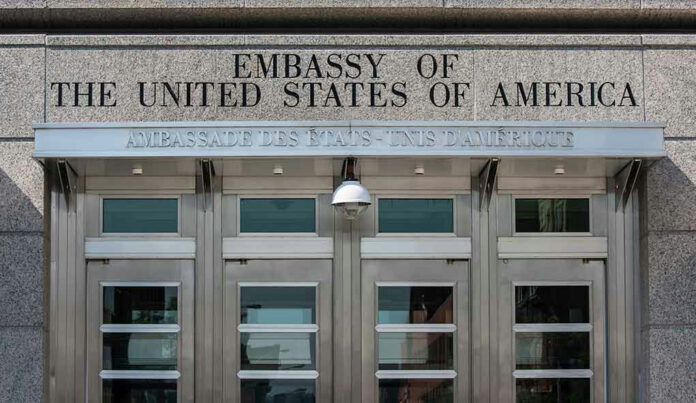
The U.S. State Department said an American government employee assigned to the embassy in Yangon was found dead in Myanmar’s biggest city.[1][3] Three unnamed people in the diplomatic community told reporters the man was discovered about two weeks earlier at the Sakura Residence & Hotel, a long-stay complex popular with foreign officials and business travelers, about a mile from the U.S. Embassy.[1][2] The State Department offered no name, no cause of death, and no timeline, citing family privacy and refusing further comment.[1][3]
Those limited facts already bother many Americans on both the right and the left, who see another example of government closing ranks instead of leveling with the public. Conservatives who distrust global institutions look at a diplomat’s unexplained death in a troubled country and ask what is being hidden. Liberals who worry about human rights and power abuse see the same silence and fear an investigation shaped more by politics than by truth, especially inside a military-controlled state that resists outside scrutiny.
The Thai Woman in Custody and Myanmar’s Opaque Police Process
Members of the Yangon diplomatic community told reporters that police are treating the death as a possible homicide and have detained a woman from Thailand in connection with the case.[1][2][3] Reporting says she is in custody and that Thailand’s Foreign Ministry has provided consular help and notified her family, but declined to share more.[1] No public records explain whether she is a suspect, a witness, or simply someone who crossed paths with the diplomat. No charge sheet, court filing, or police statement is available in the open record.[1][3]
This lack of clarity creates a dangerous vacuum. People who already think the system targets the powerless see a foreign woman held in a secretive justice system with almost no information shared. Others, focused on security and terrorism threats, may quickly assume guilt based only on detention and the word “homicide.” Because anonymous sources shaped the first wave of coverage, early guesses can harden into “facts” in the public mind long before any autopsy, toxicology, or courtroom evidence is known.[1][3]
How Secrecy, Diplomacy, and “Deep State” Fears Intersect
This case lands at a time when many Americans already believe that a small group of insiders — in Washington, foreign capitals, and global institutions — play by their own rules. Here, American officials in Thailand and at the U.S. Embassy in Myanmar simply referred all questions back to the State Department, which then refused further detail.[1][2] Myanmar’s authorities, operating in a militarized system, have not issued open investigative documents. Thailand’s government has confirmed only the bare fact of consular assistance for the woman held.[1]
That three-way silence matters because it reinforces a pattern people across the spectrum now recognize. When unexpected deaths, overseas operations, or embarrassing failures occur, the public hears “we can’t comment” far more often than clear facts. Past cases involving diplomats and foreign deaths show that early reporting often leans on unnamed officials and speculation while the real documents stay hidden for months or years.[2] Each new secretive case feeds the sense that regular citizens are expected to trust systems that no longer feel accountable.
Why This Story Resonates With Broader American Frustrations
For many conservatives, this death touches fears that global entanglements and far-off missions put American lives at risk while shielding those in charge from consequences. They see a U.S. employee dead in a foreign hotel, a foreign national detained, and yet another example of “experts” telling the public to move along without answers. For many liberals, the same story raises alarms about human rights, transparency, and the treatment of vulnerable people inside harsh foreign justice systems where politics can decide guilt.
Both sides increasingly agree on one thing: the federal government and its international partners guard information more tightly than they protect public trust. A simple, honest baseline — what happened, when, where, and who is responsible for finding the truth — should not be too much to ask. Until governments in Washington, Yangon, and Bangkok release real records, this case will remain less a solved tragedy and more a symbol of a system that asks for faith while offering secrecy in return.
Sources:
[1] Web – American Diplomat Is Found Dead in Myanmar Hotel – Woman From Thailand …
[2] Web – A Thai woman is in custody after an American diplomat was found …
[3] Web – A Thai woman is in custody after an American diplomat was found …