

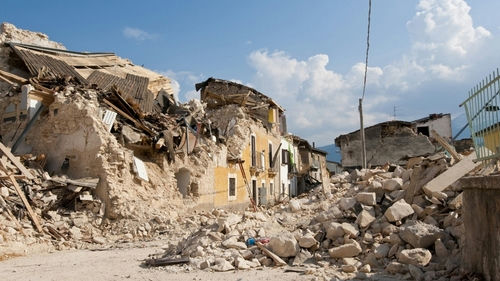
A powerful 7.8 earthquake just killed dozens in the Philippines and quietly exposed, yet again, how fragile global supply chains, disaster readiness, and honest information flows really are.
Story Snapshot
- At least 32 people are confirmed dead and more than 200 injured after a 7.8 magnitude offshore quake struck southern Mindanao, Philippines.[2][4][5]
- The quake collapsed low-rise buildings, triggered deadly landslides, and sent tsunami waves as high as about 4.6 feet into coastal communities.[1][2][4][5]
- Tsunami alerts rippled across the region, with measurable waves recorded in Indonesia, Palau, and as far as southern Japan.[1][2][4][5]
- Early reporting swung wildly on death tolls and damage, underscoring how fast-breaking disasters can produce confusion and half-formed narratives.[2][4][6]
Massive Quake Slams Southern Philippines, Communities Crushed
An offshore magnitude 7.8 earthquake struck off the southern Philippine island of Mindanao on Monday morning, killing at least 32 people and injuring more than 200 as buildings crumbled and hillsides gave way.[2][4][5] Officials say the quake was centered in the sea southwest of Maasim town in Sarangani province, at a depth of about 20 miles, sending violent shaking through the city of General Santos and surrounding communities.[1][2][4][5] Thousands fled into streets and higher ground as structures buckled.
Local disaster officials report that several mostly low-rise or “low-slung” commercial buildings in General Santos either collapsed or suffered heavy damage, including a four-story structure that partially caved in.[1][4][5] Among the dead were at least seven people in General Santos, where a popular hamburger restaurant and other small buildings failed during the strongest jolts.[2][4][5] Emergency crews combed the rubble through the day, searching for trapped survivors while aftershocks continued to rattle nerves.[2][4]
Landslides and Tsunami Turn Coastal Towns into Death Traps
The worst single incident unfolded in the mountainous municipality of Glan in Sarangani province, where a landslide unleashed by the quake buried homes and killed 13 villagers, according to a provincial disaster mitigation official.[1][2][4][5] Four more villagers in Sarangani died for still-unclear reasons linked to the quake, bringing that province’s toll alone to at least 17.[2][4][5] Officials added that other deaths were caused by falling debris, a damaged mosque, collapsing walls, and structural failures across several southern provinces.[1][2][4][5]
Tsunami waves compounded the danger for coastal families already reeling from the shaking.[1][2][4][5] Philippine authorities reported waves about 3 feet high in the provinces of Sultan Kudarat and Sarangani, with one gauge in Kiamba town recording a surge of roughly 4.6 feet at one point.[1][2][4][5] Six houses on stilts were damaged in a coastal village in Zamboanga del Sur province as taller-than-normal waves rolled in.[1][2][5] Officials lifted the tsunami warning by mid-afternoon once regional gauges showed the worst had passed.[4]
Regional Shockwaves: From Indonesia to Japan, Warning Systems Light Up
The earthquake’s impact did not stop at the Philippine shoreline; it rippled across the wider Pacific neighborhood.[1][2][4][5] Tsunami-monitoring instruments registered an approximately 2.7-foot wave off Indonesia’s Sulawesi island, and the Pacific Tsunami Warning Center reported one-foot waves reaching Palau.[1][2][4][5] Japan’s Meteorological Agency measured smaller waves, up to about eight inches, on the remote island of Chichijima and in the coastal town of Kushimoto in central Japan, confirming the quake’s regional reach.[1][2][4][5]
Authorities across Indonesia and Malaysia issued their own alerts in the immediate aftermath as data flowed in from sea-level gauges and seismic sensors.[1][2][4] Philippine officials emphasized that while this was the strongest earthquake to strike the country so far this year, the tsunami remained relatively small compared with worst-case scenarios the region has seen in past decades.[2][4] Even so, the quick cascade of warnings, measurements, and later all-clears shows how densely connected the Pacific “Ring of Fire” really is—and how closely American interests are tied to what happens in these waters.[1][2][4][5]
Information Whiplash: Death Tolls Shift as Media Race the Clock
As is typical in fast-moving disasters, the public narrative lagged behind reality and shifted by the hour.[2][4][6][7] Early counts from various outlets ranged from three or four dead to eight, then 12, then 19, before coalescing around at least 32 fatalities as local disaster offices confirmed more casualties from landslides and building collapses.[2][4][6][7] Updates from Associated Press, Reuters, broadcast networks, and local radio each reflected a slightly different slice of the same chaotic picture on the ground.[2][4][6][7]
🎯 June 8, 2026 – Evening Insight
📌 ‘NEET’ Re-Examination: Papers to be set under extreme secrecy
Experts setting the new question papers will remain in complete isolation until June 21 to prevent any leaks. Strict restrictions have been enforced after May's paper-leak… pic.twitter.com/lkLD8OF08t
— Sanatan Prabhat (@SanatanPrabhat) June 8, 2026
Reporters leaned heavily on statements from provincial disaster officials, the Philippine Office of Civil Defense, and seismological authorities while search and rescue operations were still under way, meaning many figures were explicitly labeled preliminary and subject to change.[1][2][4][5][7] Aftershocks up to magnitude 6.5 added to the uncertainty, forcing fresh damage checks and keeping families out of their homes.[2] For readers, this episode is a reminder that initial headlines in foreign disasters—especially shared in short social clips—often capture the drama but not the full, verified cost.[2][3][4][6]
Sources:
[1] YouTube – CCTV footage shows moment magnitude 7.8 earthquake hit the Philippines
[2] Web – 7.8-magnitude earthquake in southern Philippines causes 4 deaths, …
[3] Web – Earthquake of magnitude 7.8 strikes off southern Philippines, 15 …
[4] YouTube – Powerful 7.8-magnitude earthquake devastates southern Philippines
[5] Web – Philippines earthquake kills at least 19 people, unleashes small …
[6] YouTube – At least 4 dead after 7.8-magnitude quake rocks southern Philippines
[7] YouTube – Magnitude 7.8 earthquake strikes southern Philippines | DW News